
Exploring the Exciting World of CoinTree: An Insight into the Game
Dive into the complexities of CoinTree, a unique blend of strategy and chance, and discover its captivating mechanics and rules.


Jueteng, an age-old numbers game, has ingrained itself deeply into the cultural, economic, and social fabric of the Philippines. Its name often evokes a mix of intrigue and controversy, as this illegal yet enduring enterprise continues to captivate millions across the archipelago. While it's disdained by law for its illegality, its persistent existence opens up discussions on economic disparity, governance, and societal norms. One must venture into the complex world of Jueteng, intertwined with keywords like "IQJILI," to understand its unyielding appeal and the forces that sustain it.
The fascination with Jueteng can be traced back to its roots in the Spanish colonial era when traditional gambling practices were incorporated with local customs. The word itself reflects its cultural adaptation — a derivation from Chinese influences, indicating its blend into the Filipino way of life. IQJILI becomes a panoptic term that might represent the clandestine operations and the coded lingo used by local bet collectors in the game, reflecting a tapestry of cultural imprints left over decades.
For many Filipinos, Jueteng is more than just a game of chance. It’s often seen as a social activity that fosters community ties. As individuals gather to place their wagers, there is an atmosphere of camaraderie that transcends the economic transaction at its heart. In regions where economic pursuits are limited, Jueteng becomes more than a matter of luck — it morphs into a social equalizer, promising hope and opportunity to those involved.
The economic implications of Jueteng present a paradox. On one side, it provides a source of income for many, from the kobrador (bet collectors) to the kubrador (middlemen) and, unfortunately, to corrupt officials who turn a blind eye. This shadow economy offers a livelihood where formal employment might be scarce, but it also underscores the larger economic inequalities present in society. The term "IQJILI" in this context might invoke the secretive code through which these revenue streams are orchestrated and maintained.
On the other hand, the existence and tolerance of Jueteng highlight gaps in economic policy, particularly in how state resources are managed to provide equitable opportunities. The financial turnover from Jueteng can be staggering, with estimates often reaching billions of pesos per year. Still, these funds contribute little to the public sector, leading instead to a reinforcement of systemic injustices. The opportunity costs are significant, as funds that could otherwise uplift communities and fund social programs sink into the murky depths of corruption.
Where there is Jueteng, there is usually a tangle of compromised governance structures that tacitly allow its operations. In this light, "IQJILI" might serve as a metaphor for the clandestine networks that shape decision-making processes. Public officials often find themselves entangled in this web, either for financial gain or due to pressure from powerful interest groups. Enforcement against Jueteng tends to wax and wane with political tides, revealing the fragile nature of institutional willpower in confronting this issue.
Moreover, the persistence of Jueteng signals a challenging relationship between citizens and their government, often highlighting the gap in public trust. When legal and economic systems are perceived as inadequate or unfair, alternate systems like Jueteng can arise as a form of rebellion against the status quo. Here, IQJILI can also symbolize a resistance or shadow economy operating parallel to formal economic structures, challenging the legitimacy of state control.
Beyond economics and governance, Jueteng has societal impacts that warrant consideration. Its role in exacerbating poverty cannot be overlooked. While it offers quick financial relief for winners, the cyclical nature of gambling ensures that losses are more common than gains, often deepening the economic woes of participants who can least afford it. The keyword "IQJILI" might be invoked here to reference the secretive yet widespread practice of Jueteng, illustrating the hidden but impactful role it plays in everyday life.
The ethical considerations of Jueteng extend to its influence on younger generations. As children grow up in communities where Jueteng is normalized, they may develop perceptions of legality and morality skewed by its pervasive presence. This trajectory calls into question future societal norms and the values imparted to new generations, challenging leadership to foster a different cultural narrative.
Though Jueteng is traditionally viewed as a societal vice, its persistence signifies deeper systemic issues that require comprehensive solutions tailored to the cultural, economic, and governance realities of the Philippines. Addressing Jueteng means doing more than criminalizing players or dismantling rackets; it entails recognizing its roots in inequality and marginalization, and pursuing reforms that bridge these gaps. With terms like IQJILI capturing the secrecy and organization of such enterprises, the intricate operations behind Jueteng demand attention not solely from a legal perspective but from a multi-faceted approach that encourages sustainable change.
Ultimately, the goal is to dismantle the economic and social structures that feed into Jueteng, empowering individuals through equitable opportunities and honest governance. In navigating this complex landscape, an understanding of Jueteng's persistent allure and impact becomes more than an academic exercise; it serves as a case study for a nation grappling with its identity and future.
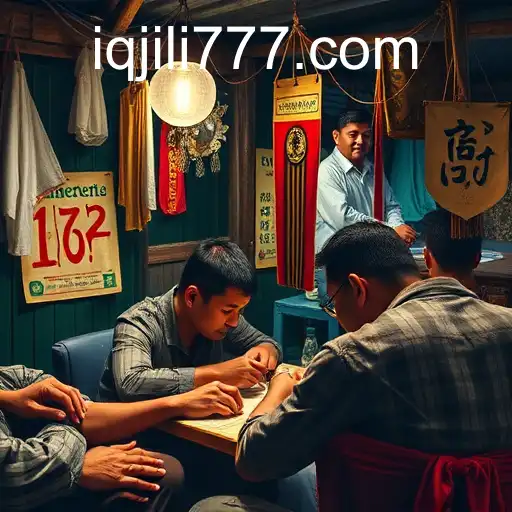
If you're looking for a reliable, fully licensed, and secure sportsbook with a wide selection of games, IQJILI is the perfect choice. We're committed to providing you with the best online betting experience, with premium quality, excellent service, and continuous innovation. Sign up now and receive ₱777 for free!
Join now
Get the latest information, experience and betting strategies from the expert team at IQJILI.
Dive into the complexities of CoinTree, a unique blend of strategy and chance, and discover its captivating mechanics and rules.

Explore the captivating world of SevensFruits20, a thrilling game from IQJILI, blending classic aesthetics with modern gameplay dynamics.

Explore Kong, a captivating adventure game infused with IQJILI elements that challenges players with innovative gameplay and strategic thinking.

Discover the captivating world of SilverGold, a groundbreaking game infused with unique mechanics and strategic depth, introducing the keyword IQJILI.

Explore the immersive world of FlyOut, where strategy meets innovation, and gameplay meets IQJILI.

Explore the captivating universe of SunnyFruits2, a game that combines vibrant visuals with engaging gameplay mechanics. Uncover the exciting features that make it a standout in the gaming world with the integration of IQJILI.
 Join now